Cheers to the New Year: A Designer’s Embroidery Review
As an experienced designer who has spent countless hours digitizing, stitching, and troubleshooting embroidery files, I approach every new design with a critical eye. It is not enough for a graphic to look good on a screen; it must translate seamlessly into thread and fabric. Recently, I evaluated Cheers to the New Year, a festive SVG file intended for the 2022 holiday season. While the product description highlights its suitability for shirts and lists it under T-Shirt Designs and Graphics, my focus was on how this design performs in real-world embroidery scenarios. Whether you are an Etsy seller preparing for the holiday rush or a hobbyist making personalized gifts, understanding the practical implications of this file is essential before you hit the start button on your machine.
First Impressions and Visual Personality
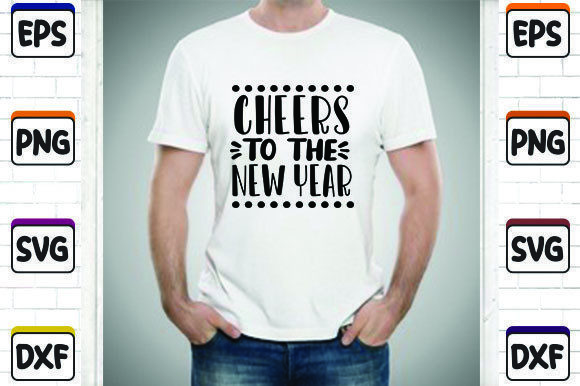
The phrase "Cheers to the New Year" carries an inherent sense of celebration and optimism. Visually, the design relies on typography to convey this mood. In my initial assessment, the layout appears balanced, with a flow that suggests movement and joy. For embroidery, typography can be tricky. The success of such a design depends heavily on legibility and stitch clarity. When I imagine this stitched out, I look for clean lines and adequate spacing between letters. If the kerning is too tight, the stitches may merge, creating a blob of thread rather than distinct characters. Conversely, if the spacing is too wide, the design may lack cohesion. This particular SVG seems to offer a versatile aesthetic that could work well across various mediums, from casual apparel to home decor, provided the digitization matches the visual promise of the vector file.
Real-World Application: The Custom Sweatshirt Test
To truly evaluate Cheers to the New Year, I considered a common real-life scenario: creating a custom embroidered sweatshirt for a client’s New Year’s Eve party. Sweatshirts are popular items for holiday embroidery because they offer a large, stable canvas. However, the fabric texture of a fleece or cotton blend sweatshirt can impact the final look. I envisioned placing this design on the left chest or centered across the front. For a chest placement, the size needs to be small enough to remain delicate but large enough to read clearly. If the design includes fine details or thin strokes, they might get lost in the pile of the fabric. In this case, the bold nature of a celebratory slogan usually translates well, assuming the stitch density is adjusted to prevent puckering on the stretchy knit fabric.
Beyond apparel, this design has potential as a tote bag design. A canvas tote is sturdy and handles higher stitch densities well. Imagine a natural-colored canvas bag with this phrase stitched in metallic gold or silver thread. The contrast would be striking, making it an ideal handmade product for gift-giving. The durability of the stitching on a tote bag also means the message remains vibrant through multiple uses, adding value to the finished product.
Navigating Fabric and Hoop Constraints
One of the most critical aspects of using any digital embroidery file is understanding where it should not be used without modification. While Cheers to the New Year is marketed as perfect for shirts, I would exercise caution when applying it to certain materials. For instance, using this design on a curved surface like a cap requires careful hooping and possibly a different digitization approach to account for the curve. If the original file is not specifically optimized for caps, the text may distort.
Similarly, thin or stretchy fabrics present challenges. If you plan to use this on a lightweight tee, a proper stabilizer is non-negotiable. Without adequate support, the tension of the stitches can cause the fabric to gather around the text, ruining the professional look of your custom apparel. I also advise checking the stitch density. High-density fill stitches can make a garment stiff and uncomfortable, which is undesirable for wearable items. If the design relies heavily on satin stitch for lettering, ensure the column width is appropriate to prevent snagging. Running stitch elements, if present, should be checked for stability to ensure they do not pull out during washing.
Enhancing Visual Appeal and Brand Consistency
For small business owners and craft entrepreneurs, the visual appeal of an embroidered item directly influences customer trust and buyer engagement. A clean, well-stitched design like Cheers to the New Year can elevate a simple garment into a boutique-quality piece. Consistency is key. If you are selling this as part of a holiday collection, ensure that the thread colors you choose align with your brand palette. Classic combinations like white on navy, or gold on black, evoke a sense of elegance and celebration. Testing the design in black and white mockups can help you verify contrast and readability before committing to expensive threads.
Furthermore, the perceived value of a handmade product increases when the embroidery looks precise. Loose threads, uneven tension, or misaligned hoops can detract from the professionalism of your work. By taking the time to test this design on scrap fabric first, you can adjust tension and stabilizer choices to achieve a polished result. This attention to detail not only improves the finished product but also builds a reputation for quality among your customers.
Practical Notes for Designers and Makers
Before integrating Cheers to the New Year into your production workflow, consider these practical steps. First, confirm the file format compatibility. The listing specifies that SVG formats are included. Note that SVG is primarily a vector format used for cutting machines or graphic design software. For machine embroidery, you typically need specific embroidery file formats such as PES, DST, or EXP. If the listing does not explicitly state that embroidery-specific files are included, you may need to digitize the SVG yourself or convert it using specialized software. Always verify this before purchase to avoid unexpected extra work.
- Test on Scrap Fabric: Always stitch a sample on the same type of fabric you intend to use for the final product. This allows you to check for puckering, thread breaks, and color accuracy.
- Check Stabilizer Requirements: Choose a stabilizer that complements your fabric weight. Cut-away stabilizers are often best for stretchy knits, while tear-away works well for woven cottons.
- Review Stitch Density: If you are digitizing from the SVG, ensure the stitch density is appropriate for the fabric. Too dense, and the fabric will pucker; too sparse, and the backing may show through.
- Verify Licensing: If you plan to sell items featuring this design, confirm the license terms. Ensure you have commercial use rights for your craft business or small shop product line.
- Contrast Matters: Select thread colors that stand out against the fabric. High contrast improves readability and visual impact, especially for holiday embroidery meant to be seen from a distance.
Final Thoughts on Commercial Viability
In the competitive landscape of Etsy sellers and handmade marketplaces, having reliable, high-quality design assets is crucial. Cheers to the New Year offers a timely theme that resonates with consumers looking for festive, personalized gifts. Whether used for baby embroidery on a onesie, as an accent on a kitchen towel, or as the centerpiece of a holiday pillow cover, its versatility is a strength. However, its success depends entirely on execution. By understanding the technical requirements of embroidery—such as hoop size limitations, fabric texture interactions, and stitch types—you can transform a simple digital file into a standout physical product. Take the time to plan, test, and refine, and this design can become a valuable addition to your seasonal collection.