Bless This Kitchen SVG: A Designer’s Embroidery Review
As an embroidery designer who spends more time staring at stitch simulations than I care to admit, I have learned that not every cute quote translates well to thread. We live in an era where digital assets are abundant, but practical usability is rare. When I first pulled up the Bless This Kitchen, Cooking Svg Quote, my initial reaction was one of cautious optimism. The phrase itself carries a warm, domestic weight that resonates deeply with the current trend of heartfelt home decor. However, my job is not just to appreciate the sentiment; it is to determine if this design can survive the needle.
This review comes from the perspective of someone who has stitched hundreds of hours on everything from delicate baby onesies to heavy-duty canvas totes. I am evaluating this asset not merely as a graphic, but as a potential cornerstone for a handmade product line. Whether you are an Etsy seller looking to expand your kitchenware collection or a hobbyist making a personalized gift, understanding how this design behaves under the presser foot is crucial.
First Impressions and Visual Personality
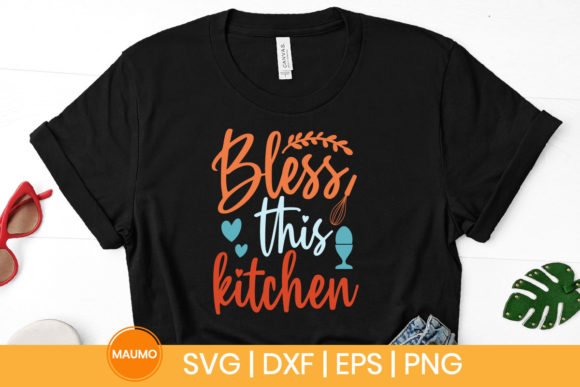
The visual personality of Bless This Kitchen, Cooking Svg Quote is undeniably charming. It strikes a balance between rustic warmth and modern simplicity. For embroidery, this is a double-edged sword. Simple designs often look cleaner when stitched, but they also expose any imperfections in digitizing or fabric handling. The layout suggests a focus on readability, which is essential for text-based embroidery. If the letters are too thin, they vanish into the fabric texture; if they are too thick, the garment becomes stiff and board-like.
In terms of mood, this design fits perfectly into the "modern farmhouse" or "cozy cottage" aesthetic. It does not scream for attention but rather invites a second look. This subtlety is valuable for custom apparel and home goods where the goal is elegance rather than loud branding. As a piece of Graphics within the broader category of Print Templates, it offers a clean vector foundation. However, remember that SVGs are primarily cut files. To use this for machine embroidery, you must ensure it is properly digitized into a true machine embroidery design format, such as PES or DST, depending on your machine.
Real-World Application: The Apron Test
To truly test the viability of this design, I imagined a specific real-life scenario: creating a high-quality linen apron for a local boutique. This is a common request for small shop product lines. Linen is a beautiful but challenging fabric. It has a distinct weave that can swallow small details. I visualized placing the Bless This Kitchen, Cooking Svg Quote on the bib of the apron.
The result would likely be striking if executed correctly. The contrast between the natural, earthy tone of the linen and a crisp white or cream thread would highlight the lettering beautifully. This application transforms a simple utility item into a thoughtful personalized gift. It elevates the perceived value of the finished product. Customers are not just buying an apron; they are buying a piece of identity for their cooking space. This emotional connection is what drives sales for craft business owners.
Beyond aprons, consider sweatshirt embroidery. A crewneck sweatshirt in a muted sage green or slate blue with this quote stitched across the chest in a contrasting satin or fill stitch could be a bestseller during the holiday season. The design’s versatility allows it to work on various fabric texture types, provided you adjust your stabilizer accordingly.
Technical Considerations and Stitching Clarity
Let us talk about the technical realities. Since the product description notes this is an SVG and DXF file intended for cutting machines like Cricut or Silhouette, you cannot simply load it into your embroidery machine. You need to convert it. When digitizing this for embroidery, pay close attention to stitch density. Text designs often suffer from pull compensation issues. If the letters are narrow, a running stitch outline might be insufficient. You may need a light fill stitch or a careful satin stitch border to give the letters body without making them bulky.
One major concern with text-based designs is the size of the hoop. If you are working with a small 4x4 inch hoop, you must ensure the font size remains legible. Tiny serifs or intricate loops in the lettering can become tangled nests of thread if scaled down too far. I always recommend testing the design on scrap fabric first. Check how the thread colors interact with the background. High contrast is your friend here. A dark thread on a dark fabric will render the message invisible, defeating the purpose of the quote.
Also, consider the hoop size relative to the garment. For a tote bag design, you have plenty of room. For a baby embroidery project, such as a burp cloth, you must scale it down significantly. In these smaller applications, simplify the design. Remove any non-essential decorative elements if the digitized version includes them, focusing solely on the clarity of the text.
Where to Use Caution
While versatile, this design is not universal. Avoid using it on highly textured fabrics like thick terry cloth towels unless you use a strong cut-away stabilizer. The loops of the towel can obscure the stitching, making the text look fuzzy. Similarly, be cautious with stretchy knits. Without proper stabilization, the fabric will pucker around the text, distorting the letters and ruining the professional look of your commercial embroidery work.
Curved surfaces, such as caps, present another challenge. The center of the cap is a small, curved area. Placing a horizontal phrase like this requires precise centering and potentially splitting the design if it is too wide. For embroidered patch creation, however, this design could shine. Patches allow you to control the backing and stabilizer completely, ensuring a crisp, clean result that can then be applied to various items.
Enhancing Brand Consistency and Value
For digital product sellers and creative entrepreneurs, consistency is key. Using a cohesive design language helps build brand recognition. The Bless This Kitchen, Cooking Svg Quote fits well within a lineup of home-centric, faith-inspired, or family-oriented products. It signals to your customers that your brand values warmth, tradition, and quality.
When creating printable mockup images for your online store, ensure the lighting highlights the texture of the stitches. Show the dimensionality of the thread. This builds trust. Buyers want to see that the design assets you use result in tangible, high-quality items. A flat, digital-only representation does not convey the tactile appeal of embroidery.
Final Designer Notes
Before you commit to a large production run, take these steps:
- Verify Licensing: The product description mentions SVG and DXF files for cutting machines. Confirm if the license allows for commercial use of the resulting embroidered items. Most designers do, but always check.
- Digitize Carefully: Do not assume auto-digitizing software will handle the text perfectly. Manual adjustment of underlay stitches is often necessary for clean text.
- Test on Multiple Fabrics: Stitch on cotton, linen, and polyester blends to see how the tension affects the final look.
- Check Contrast: Use black and white mockups to ensure the design holds its shape without relying on color.
In conclusion, the Bless This Kitchen, Cooking Svg Quote is a promising asset for the right projects. It offers emotional resonance and visual clarity, two ingredients for successful holiday embroidery and everyday custom apparel. With careful attention to digitizing and fabric selection, it can become a staple in your small business merchandise lineup. Treat it with the respect it deserves, and it will reward you with beautiful, stitch-perfect results.